
Pistoia Alliance's FAIR & Data Governance Training: Technical Infrastructure - the FAIR Data Registry
.png)
Heiner Oberkampf, CEO and co-founder of ACCURIDS, introduced the essential role of a FAIR Data Registry in the Pistoia Alliance FAIR & Data Governance Training. He clarified various identifier challenges and emphasized that a shared FAIR data language with unique identification using URIs and GUPRIs is crucial for automation and AI.
Defining GUPRIs
Heiner defined GUPRIs as long-lasting, clickable references governed by an authority. Citing AstraZeneca's holistic metaverse example, he detailed the implementation through data management systems registering equipment to create a GUPRI by combining an existing ID with a namespace.
Building Blocks for Scale
To achieve FAIR data at scale, Heiner outlined building blocks starting with an enterprise-wide reference classification or taxonomy. He detailed three main steps to success:
- Registering things with semantic context.
- Mapping existing data.
- Interlinking data to build a scalable knowledge graph.
He also outlined four different integration levels (L1-L4) between business applications and the FAIR Data Registry.
Integration & Practical Adoption
Heiner concluded by comparing the FAIR data registry integration pattern to Gartner's MDM registry pattern for scalability. He illustrated practical adoption with AstraZeneca's production use, which currently involves:
- Over 500 registered namespaces.
- More than 25 million GUPRIs under governance.
Read more
.webp)
.webp)
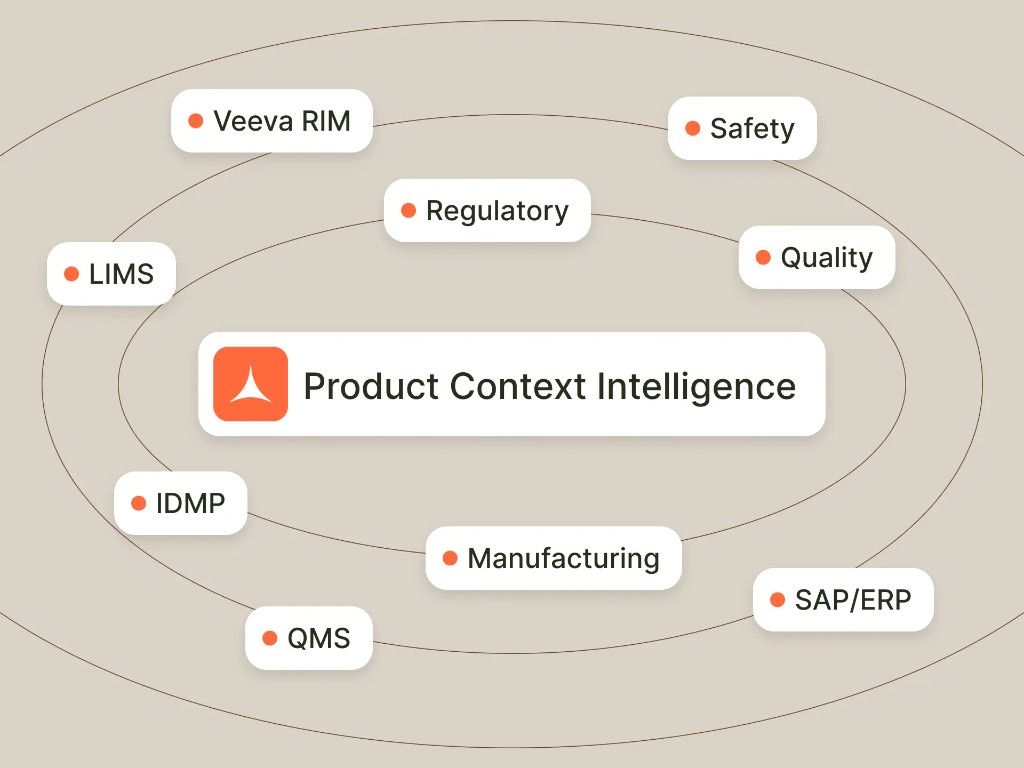
From Fragmented Data to a Unified Backbone. In Months, Not Years.
.png)